“Sustainable living is a lifestyle that attempts to reduce an individual’s or society’s use of the Earth’s natural resources and personal resources. Practitioners of sustainable living often attempt to reduce their carbon footprint by altering methods of transportation, energy consumption, and diet.”
“YOU HAVE THE POWER TO MAKE AN IMPACT IN THE WORLD!”
WHAT IS SUSTAINABLE LIVING?
Why do we need it? Where did it began? Is it just a trend? What is the seriousness behind it!!! There are a lot of questions around it. So let’s get to it point by point!
Sustainable living is a lifestyle that looks to minimise one’s environmental impact, so that are sustainable both for the Earth and for the people.
There are endless ways to live sustainably, including: reducing your use of resources, composting, relying on clean energy sources, reducing your consumption of single-use plastic, eating less animal products, shopping for clothing and other items sustainably, buying local, and more.
Sustainable Living Vs. Zero Waste — What’s the Difference?
Zero waste lifestyle mainly aims at reducing the plastic usage and have minimal waste after composting. Although the aims and pattern of both sustainable and zero waste lifestyle are similar.
For example, a person who follows zero waste lifestyle might be comfortable in eating meat. While sustainable lifestyle looks into a bigger picture of saving the environment and would want to go for veganism.
How to Start Sustainable Living
Living a sustainable life can be different for everyone depending upon their lifestyle. There are multiple ways to begin with
Eating a Plant-Based Diet
Animal products have such a high impact on the carbon footprints they leave behind. Shifting to a vegan diet can help reduce them. There are many people who are willing to give up dairy and meat but love to have cheese, or they might not have found the alternate for a partial product. Well, continue consuming those particular products and leave the rest.
Composting
Setting up a compost pit in your backyard for spoilt leftover, vegetable peels etc help reduce footprints. It’s not possible for everyone to do so, but it can be done collectively by a society or the building you live in.
Reducing Single-Use Plastic
Do yourself a favour and keep a non plastic carry bag in your pocket, purse, car, bike so that you don’t have to take a plastic bag from the shopkeeper while impromt shopping. Replace use and throw plastic with cloth, paper at your office, kitchen, bathroom.
Transportation
If you drive a gas-powered car every day, consider alternatives with lower emissions if they are available to you.
Shopping
There are a lot of plastic free or packaging free shops promoting sustainable development. Items comes with minimal packaging and with almost no plastic. It is so much more better to compost a thin paper that came with the noodle than actually throwing huge plastic packaging of instant noodle.
SIGNIFICANCE OF SUSTAINABLE LIFESTYLE
With climate change becoming a more serious problem every day, it’s now more important than ever for people to do their part to reduce their environmental impact. Demanding lawmakers and corporations institute laws or policies to help with that is extremely important, but lowering your personal impact can make a huge difference as well.
What Impact Does Sustainable Living Have?
How Can Sustainable Living Stop Climate Change?
Sustainable Living on a Budget?
There are many more things to learn about. And we will be going through them in coming blog posts.
It might not be the most efficient lifestyle compared to the one we are living for everyone. But there are many things that we can replace to start contributing to sustainability.
Let’s start small and create a huge difference.
The greenhouse gas emissions that drive warming “now substantially exceed the highest concentrations recorded in ice
cores during the past 800,000 years,” the IPCC said. Atmospheric carbon dioxide levels, which primarily come from the
burning of fossil fuels, have risen 40% since pre-industrial times.
We’ve gathered some notable effects of climate change below.
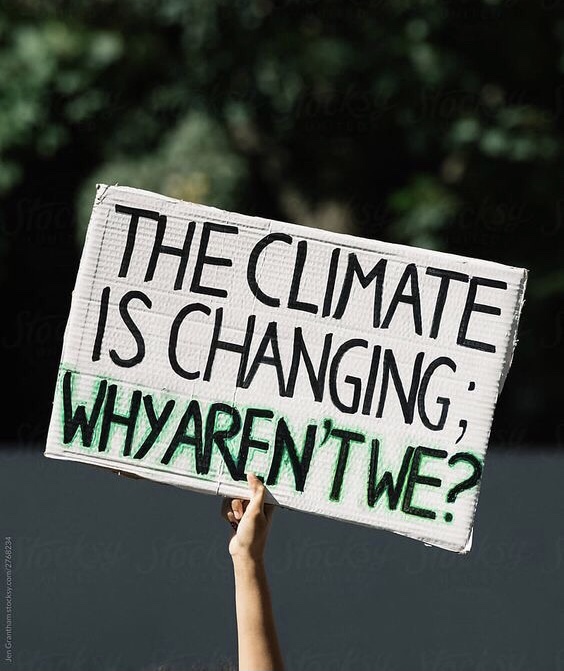
- Climate change will be insanely expensive.
Asset destruction, forced relocations, droughts, extinctions, and all of the other bad things we’re going to discuss will add
up in costs to the global economy
By 2030, climate change costs are projected to cost the global economy $700 billion annually. As climate change continues,
costs will go up. - Hurricanes could become up to 11% more intense and 20% wetter by 2100.
The recent National Climate Assessment found that Category 4 and 5 hurricanes (the strongest) have increased in
frequency, intensity, and duration since the 1980s - 136 of the world’s most historic places could be in jeopardy.
If global temperatures rise one-degree C, more than 40 of the more than 700 UN world heritage sites will be seriously
threatened by water within the next 2000 years, according to a study published in Environmental Research Letters. - An additional 8% of the world population will experience water scarcity by 2100.
“Rates of water loss, due in part to evaporation, were double the long-term average. The heat and
drought depleted water resources and contributed to more than $10 billion in direct losses to
agriculture alone,” said the Assessment.
While some places are becoming drier, others are in danger of serious floods - Some reptiles’ species could turn mostly female, potentially leading to their extinction.
Many reptiles rely on ambient temperatures to regulate physiological processes; they will be directly affected by global
temperature change.
For turtles, nest temperature determines the sex of the offspring. Changes in sex ratio could affect the potential to
produce offspring as well as the evolutionary fitness. - An additional 20 million more children will go hungry by 2050.
A report from the World Food Program expects extreme weather events like floods, droughts, forest fires, and tropical
cyclones to damage farmlands, threatening food security for millions of people. Climate impacts on crop yields will
increase the number of malnourished children by around 11 million in Asia, 10 million in Africa, and 1.4 million in Latin
America, the report said.
HOW TO LIVE A SUSTAINABLE LIFESTYLE ?
STEP BY STEP ~
- Check your settings
Make sure to activate the device’s energy-saver settings. You’ll prolong the life of the battery, as well as save energy when plugged in. - Unplug
Keep electronics plugged into a power strip and flip its switch to “off” when you leave the house. - Light it up
Use compact fluorescent lights (CFLs) instead of regular bulbs. - Shop smart
Go for paper bags, cloth bag, or if your purchase is small enough, don’t take a bag at all. Prefer a BPA-free water bottle, a water-filtering pitcher, and a reusable portable insulated mug. - Buy local
Buying locally doesn’t just have to mean your groceries. - Be thrifty
There is nothing embarrassing in using second hand. - Plant it
Try plants to improve air quality, and dried lavender to neutralize odors. - Check the labels
Look for more stars on Energy Star label. - Avoid water waste
There are tons of ways to save and conserve water. - Rearrange the furniture
Maximize heating and cooling efficiency by opening the curtains and lifting the blinds during the day and closing them at night to insulate the windows. - Cut down on paper
Replace paper wipes with cloth wipes, print less, use recycled paper,etc. - Reuse AND recycle.
Use reusable items and donate them later for recycling. - Join a club
You can also join green organizations on campus and help organize sustainability education initiatives for your peers, local businesses, and even your school. - Donate your stuff
If your time is limited and you would like to support sustainability in another way, consider making a donation to a favorite nonprofit. - Take a class
Finally, if you feel that you want to study sustainability in college and make a career out of it, by all means, do so!
Need some more inspiration💡 That’s okay, totally ! Voila! Here you go . . .
Presenting to you some exciting Sustainable fashion around us:
• Adrish- Koregaon Park
It is the only establishment in the city that advocates a zero-waste, organic, plastic-free policy through its varied products. You will find amazing handspun khadi kurtis that will add simplicity and class to your wardrobe. Pair them up with eco-friendly zero-waste bags and clutches.
• Ek Dori
It is a homegrown fashion label started by Abhilasha Mehta. From linen hand-embroidered saris to up-cycled dresses and hair accessories– Ek Dori aims to be as zero-waste as possible. A homegrown Pune label, their t-shirts are made from 100% non-GMO certified organic cotton- dyed without the use of bleach or chemicals. We love that they’re eco-friendly, and also super-soft on the skin.
• Upasana- Koregaon Park
What started as a small business in Auroville in 1997 has grown into a brand that’s been showcased at fashion weeks.Working with farmers, weavers Upasana aims to empower not just women but village communities in general. They reuse waste materials, cut gorgeous silhouettes out of khadi and use hand-woven materials and hand-embroidery. Their upcycled dresses will make you realise there’s a lot you too can do with your old garments. You can also shop for bags and cotton pouches in all sizes big and small.
INSPIRATION FROM AROUND THE WORLD
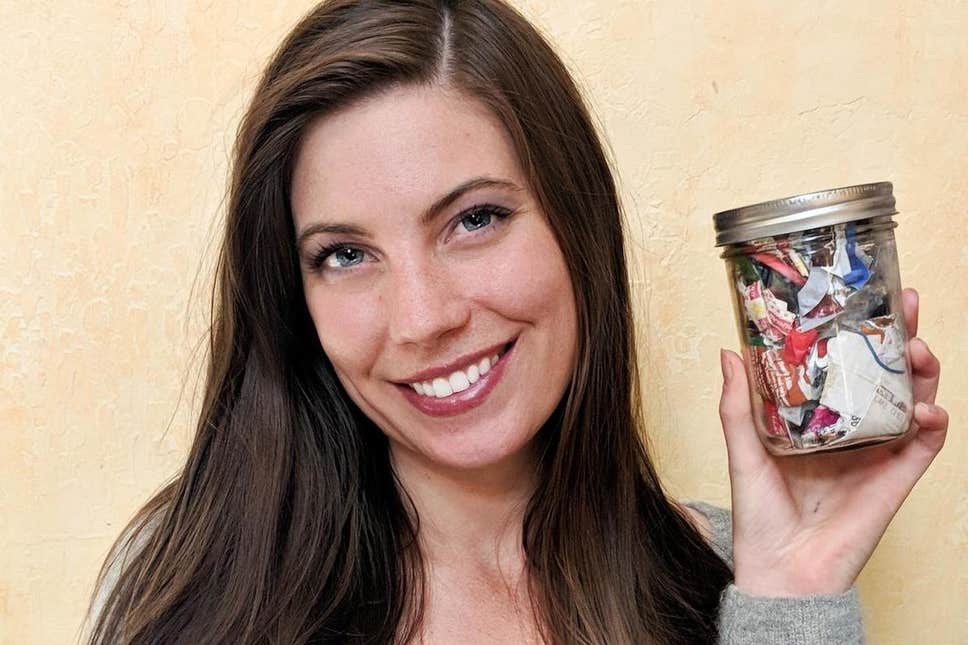
Going Zero Waste
Kathryn Kellogg turned her personal health journey into inspiration for more than 15,000 people to give up plastic and all waste for both their own health and that of the planet.
Instagram Handle : https://www.instagram.com/going.zero.waste/?hl=en

ZeroWasteChica
Heidi Violet has nearly 27,000 followers who are interested in her natural remedies and recipes for beauty products that help make waste unnecessary.
Instagram Handle : https://www.instagram.com/zerowastechica/?hl=en

Zero-Waste Chef
If you’ve ever been in the middle of a supermarket, you know how hard it is to create delicious dishes without filling up your trash bin. Anne-Marie Bonneau is here to help.
Instagram Handle : https://www.instagram.com/zerowastechef/?hl=en

Rocket_Science
Rocket_Science, by Anita Vandyke has almost 39,000 followers who tune in for good tips about reducing food waste, which is a major reason why landfills are maxing out.
Instagram Handle : https://www.instagram.com/rocket_science/
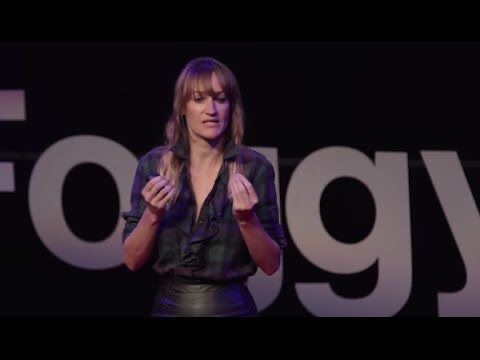
Zero Waste Home
Zero Waste Home, curated by Bea Johnson, teaches the five R’s — refuse, reduce, reuse, recycle, and rot — to more than 100,000 Facebook followers.
Instagram Handle : https://www.instagram.com/zerowastehome/?hl=en

The Zero Waste Nerd
The Zero Waste Nerd is another great zero-waste influencer named Megean, who gives tips for traveling without hurting the environment to almost 11,000 followers.
Instagram Handle : https://www.instagram.com/zerowastenerd/?hl=en
We really hope we it was worth your time. 🙂 Also feel free to let us know how do you like it in the comment section below.
 Go Green